

Settling an estate in New Jersey involves strict tax obligations that hinge on accurate property valuation. The value of real estate at the date of death determines the estate's tax liability and the beneficiaries' future cost basis. New Jersey Real Estate Appraisal Group (NJREAG) helps executors and heirs navigate these requirements by providing independent, state-certified appraisals that meet both state and federal standards.
1. The Valuation Date Must Be the Date of Death
The appraisal must reflect market value on the exact day the owner passed away. A Date of Death (DOD) appraisal is a retrospective valuation that determines fair market value as of the specific date of death. It is not an estimate of what the property is worth today. If the owner passed away in 2024, the appraisal must use 2024 market data, even if the report is completed in 2026.
2. IRS Form 706 Reporting Standards
Federal estate tax returns require a certified appraisal to support the reported value. When an estate exceeds the federal exemption threshold, the IRS requires detailed documentation of asset values. A state-certified appraisal provides the defensible evidence needed to avoid audits or valuation challenges. The report must clearly state the effective date and the methodology used to arrive at the value.
3. New Jersey Inheritance Tax Thresholds
New Jersey imposes inheritance taxes based on the relationship between the decedent and the beneficiary. Unlike the federal estate tax, New Jersey taxes the inheritance received by specific classes of beneficiaries. The value of the property directly impacts the tax bracket and the total amount owed. Accurate valuation is critical because overvaluing can lead to unnecessary tax payments, while undervaluing can trigger penalties.
4. Step-Up in Basis for Beneficiaries
The date-of-death value establishes the new cost basis for heirs. When a beneficiary inherits real estate, their cost basis is generally adjusted to the fair market value at the date of death. This step-up in basis affects capital gains taxes if the property is sold later. An accurate appraisal ensures the beneficiary has the correct basis for future tax reporting.
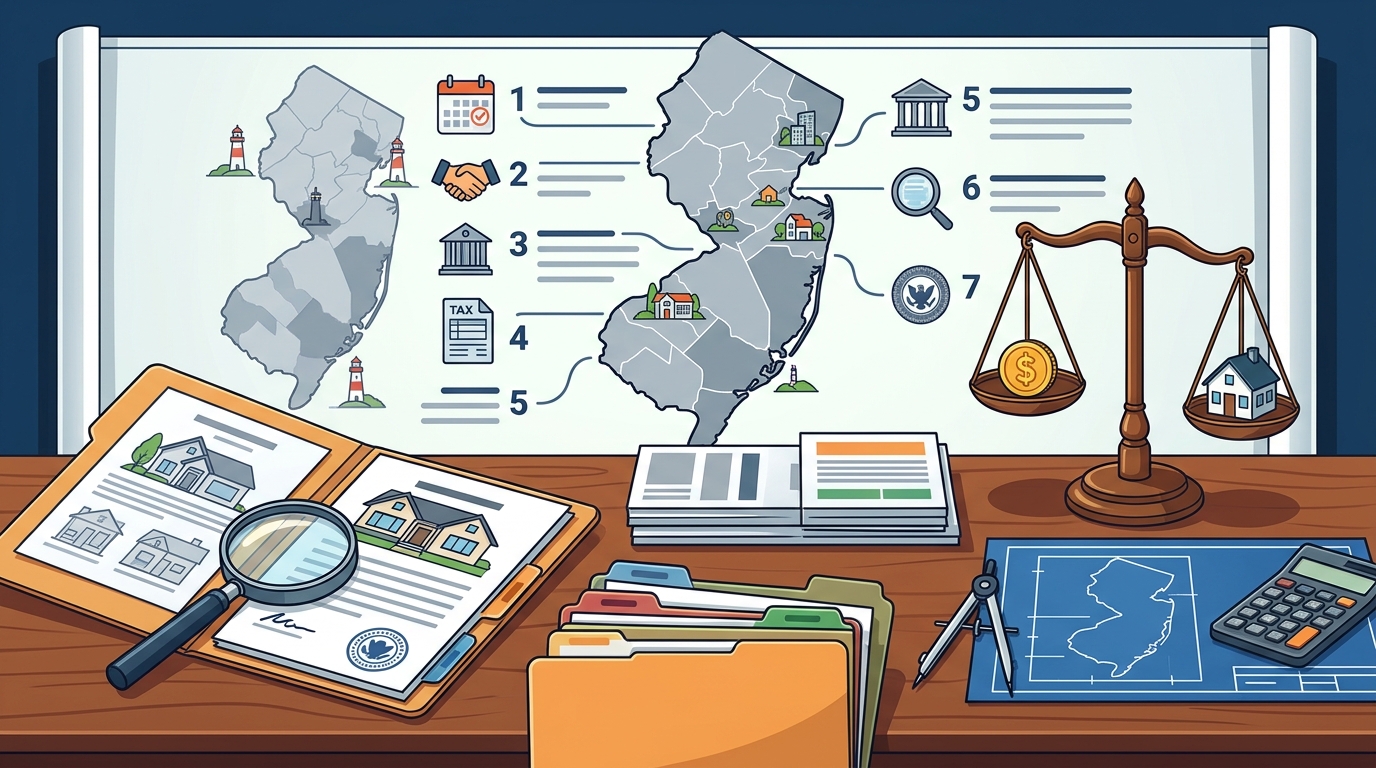
5. Compliance with USPAP Standards
Appraisals must adhere to the Uniform Standards of Professional Appraisal Practice (USPAP). USPAP is the code of ethics and professional practice standards for the appraisal profession. Courts, the IRS, and New Jersey tax authorities require appraisals to be prepared in compliance with these standards. A USPAP-compliant report includes a detailed analysis of comparable sales and property characteristics.
6. Property Condition and Improvements
The appraisal must account for the property's condition as of the date of death. If the property has undergone significant renovations or damage since the date of death, the appraiser must determine what is relevant to the historical valuation. The report should document the physical characteristics of the property at the time of death, not its current state, unless the changes occurred before the effective date.
7. Local Property Tax Assessment Adjustments
Estate appraisals may influence local property tax assessments in New Jersey. While the estate tax appraisal is for federal and state tax purposes, the value can also be used to challenge local property tax assessments. New Jersey uses a ratio system where assessments are a percentage of market value. An accurate appraisal can help ensure the property is assessed fairly for ongoing property taxes.
Choosing the Right Appraisal Approach
Select an appraisal method based on the specific tax purpose and the property's complexity. For most estates, a retrospective date-of-death appraisal by a state-certified appraiser is the standard requirement. If the property has unique features or is part of a larger estate, consider a comprehensive report that addresses both federal and state tax implications.
Frequently Asked Questions
Can I use a Zestimate for estate tax purposes?
No. Automated valuation models (AVMs) like Zestimates are not accepted by the IRS or New Jersey tax authorities for estate tax reporting. You need a formal appraisal by a state-certified appraiser.
How long does an estate appraisal take?
Typical residential assignments are often delivered within approximately 5 to 10 business days after the inspection. Complex properties or those requiring extensive historical research may take longer.
Do I need an appraisal if the estate is small?
Even small estates may require an appraisal to establish the correct cost basis for heirs. It is advisable to consult with an attorney or CPA to determine if a formal appraisal is necessary for your specific situation.
Can the appraisal be done after the property is sold?
Yes, a retrospective appraisal can be completed after the property is sold, provided the appraiser can research the market conditions and comparable sales from the date of death.
Who pays for the estate appraisal?
The cost of the appraisal is typically paid by the estate. It is considered an administrative expense of the estate and may be deductible for estate tax purposes.
Is the appraiser required to testify in court?
In some cases, particularly if the valuation is challenged, the appraiser may be required to testify. A state-certified appraiser is qualified to provide expert testimony in New Jersey courts.
Next Steps for Estate Executors
When you are ready to establish the value of an estate property, to discuss your specific needs. New Jersey Real Estate Appraisal Group provides independent, state-certified appraisals that meet the rigorous standards of New Jersey and federal tax authorities.