

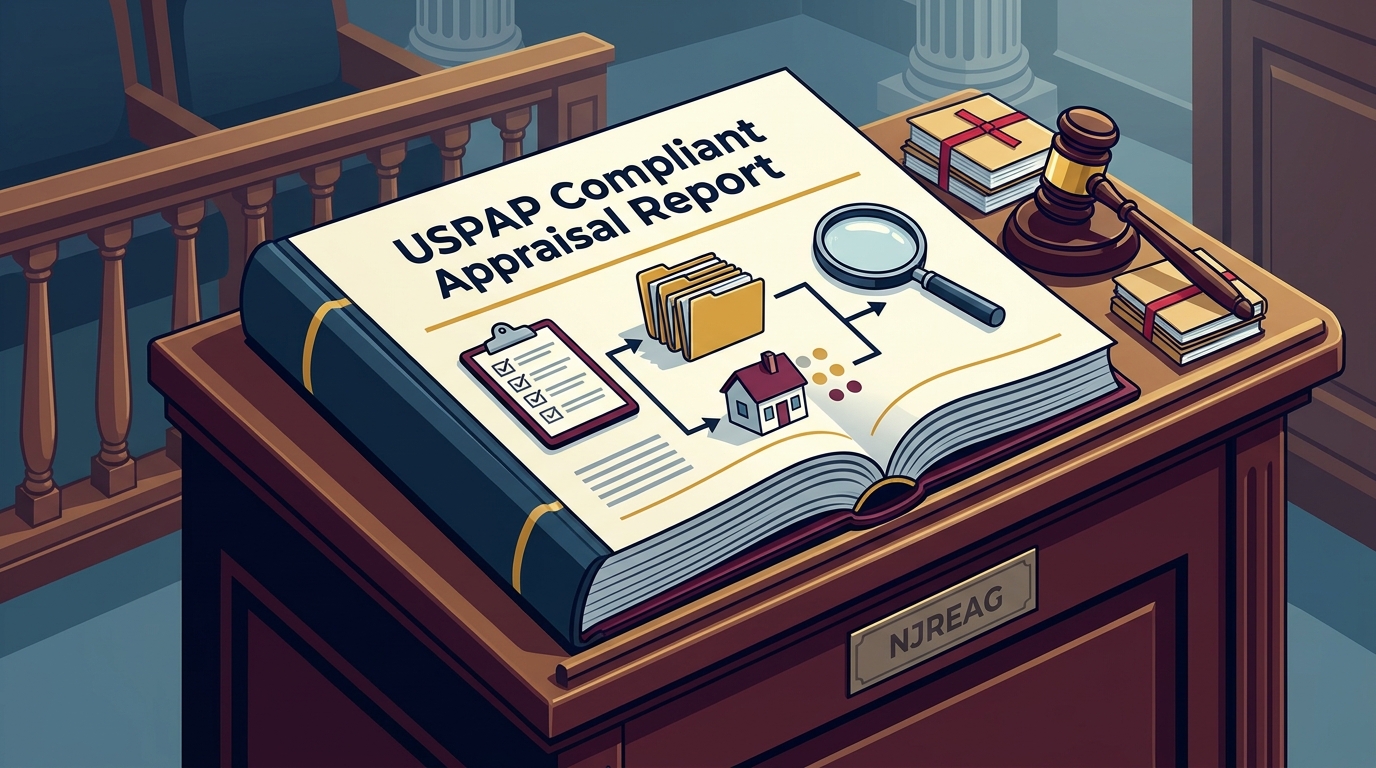
USPAP compliance means an appraiser follows the Uniform Standards of Professional Appraisal Practice, the national ethical and performance standard for the profession. In New Jersey courts, this compliance is the baseline for admissibility and credibility. It ensures the valuation is unbiased, well-documented, and defensible under cross-examination. New Jersey Real Estate Appraisal Group emphasizes that meeting these standards is not optional for legal matters; it is the foundation of a report that holds up when challenged by opposing counsel or a judge.
The Core Definition of USPAP
USPAP is the set of standards and ethics that govern how appraisers perform their work. It is issued by The Appraisal Foundation and is adopted by state licensing boards, including the New Jersey Real Estate Appraiser Board. For an appraiser, compliance is a legal and professional obligation. It dictates how an assignment is accepted, how the work is performed, and how the results are reported.
The standards are divided into two main categories: the Standards of Professional Appraisal Practice and the Ethics Rule. The Standards of Practice dictate the specific requirements for different types of appraisal work, such as residential, commercial, or land. The Ethics Rule prohibits bias, fraud, and misrepresentation. In a court setting, a judge or jury will look for evidence that the appraiser adhered to these rules. If an appraiser cannot demonstrate compliance, the entire valuation may be excluded from evidence.
Impartiality and Independence in Legal Valuations
One of the most critical aspects of USPAP is the requirement for impartiality. An appraiser must be independent and unbiased. In New Jersey divorce or estate cases, this is often the first thing opposing counsel attacks. They will question whether the appraiser was hired by one party with the intent to inflate or deflate the value. USPAP explicitly forbids an appraiser from allowing a fee structure or a client relationship to influence the final value conclusion.
For example, in a contested divorce in Bergen County, if an appraiser is paid a percentage of the property value, that violates the Ethics Rule. The fee must be fixed or based on the complexity of the work, not the outcome. Divorce appraisals require this level of strict independence. The appraiser must document that they did not advocate for either spouse. This documentation is what allows the report to survive cross-examination in a New Jersey Superior Court.
Documentation and the Competence Rule
USPAP requires that an appraiser's work be documented sufficiently to allow a competent appraiser to understand the methods, techniques, and procedures used. This is known as the Competence and Confidentiality Rule. In court, this documentation is the appraiser's primary defense. If the appraiser cannot explain why they selected specific comparable sales, or why they made certain adjustments, the value is vulnerable.
Consider a tax appeal in Mercer County. The appraiser must show they had the knowledge and experience to value the property. If they did not have that knowledge, USPAP requires them to disclose their limitations and seek assistance from a specialist. Failing to do so is a violation. The report must include a clear description of the property, the market analysis, and the reasoning behind the final number. This transparency is what distinguishes a professional appraisal from a casual estimate.
Admissibility and Expert Testimony in New Jersey
In New Jersey, an appraisal report is often submitted as an exhibit, but the appraiser must also be prepared to testify as an expert witness. USPAP compliance ensures that the appraiser is qualified to offer an opinion on value. The court will ask if the appraiser is a state-certified professional and if they followed recognized standards. The answer must be yes.
When defending a valuation, the appraiser must be able to walk the judge through the process. They must explain the effective date, the highest and best use, and the selection of comparables. If the report is not USPAP-compliant, the opposing party can move to strike it. This can delay proceedings and weaken the client's position. Estate appraisals are particularly sensitive because they often involve IRS reporting and probate courts. The appraiser must be ready to defend the historical value against challenges from heirs or the state.
Consequences of Non-Compliance
Violating USPAP can have serious consequences for an appraiser. It can lead to disciplinary action by the state board, including fines, suspension, or revocation of the license. In a court case, it can lead to the exclusion of the appraisal and a loss of credibility for the client. The appraiser may also face civil liability if their non-compliance causes financial harm to a party.
For clients, the risk is that their legal strategy is undermined by a flawed valuation. A judge who sees a non-compliant report will likely view the client's entire case with skepticism. This is why it is essential to hire an appraiser who is not only certified but also experienced in legal matters. Our FAQ section often addresses these concerns, highlighting the importance of choosing a professional who understands the legal landscape of New Jersey.
Key Takeaways
- USPAP is the national standard for appraisal practice, adopted by New Jersey for state-certified appraisers.
- Impartiality is a core USPAP requirement; appraisers must not be biased toward any party in a legal dispute.
- Documentation must be thorough enough for another competent appraiser to understand the methodology.
- Non-compliance can result in the exclusion of the appraisal from court evidence.
- Appraisers must be prepared to testify as expert witnesses and defend their work under cross-examination.
- Choosing a USPAP-compliant appraiser protects the client's legal position and financial interests.
Frequently Asked Questions
What is the primary purpose of USPAP in a court setting?
The primary purpose is to ensure that the appraisal is unbiased, well-documented, and performed by a qualified professional. This makes the valuation admissible and credible in legal proceedings.
Can a non-USPAP compliant appraisal be used in New Jersey court?
Generally, no. New Jersey courts require appraisals to meet professional standards. A non-compliant report is likely to be excluded as evidence or given little weight by the judge.
How does USPAP protect the client in a divorce case?
It ensures the appraiser is independent and not influenced by either spouse. This provides a neutral value that both parties can trust, reducing the likelihood of disputes over the number.
What happens if an appraiser violates USPAP?
The appraiser may face disciplinary action from the state licensing board, including fines or license revocation. In court, their credibility will be damaged, and the report may be struck.
Do all New Jersey appraisers follow USPAP?
All state-certified and state-licensed appraisers in New Jersey are required to follow USPAP as a condition of their license. However, the level of experience in legal matters varies among professionals.
How can I verify an appraiser's USPAP compliance?
You can check their license status with the New Jersey Real Estate Appraiser Board. You can also ask for examples of their past legal work and review their reports for thorough documentation and clear methodology.
Conclusion
USPAP compliance is the backbone of a defensible appraisal in New Jersey courts. It ensures that the value is unbiased, well-supported, and prepared by a qualified professional. For clients involved in divorce, estate, or tax matters, choosing an appraiser who strictly adheres to these standards is essential. Contact New Jersey Real Estate Appraisal Group to discuss your specific legal valuation needs and ensure your report is built on a foundation of professional integrity.