

Which New Jersey Appraiser Will Hold Up in Court?
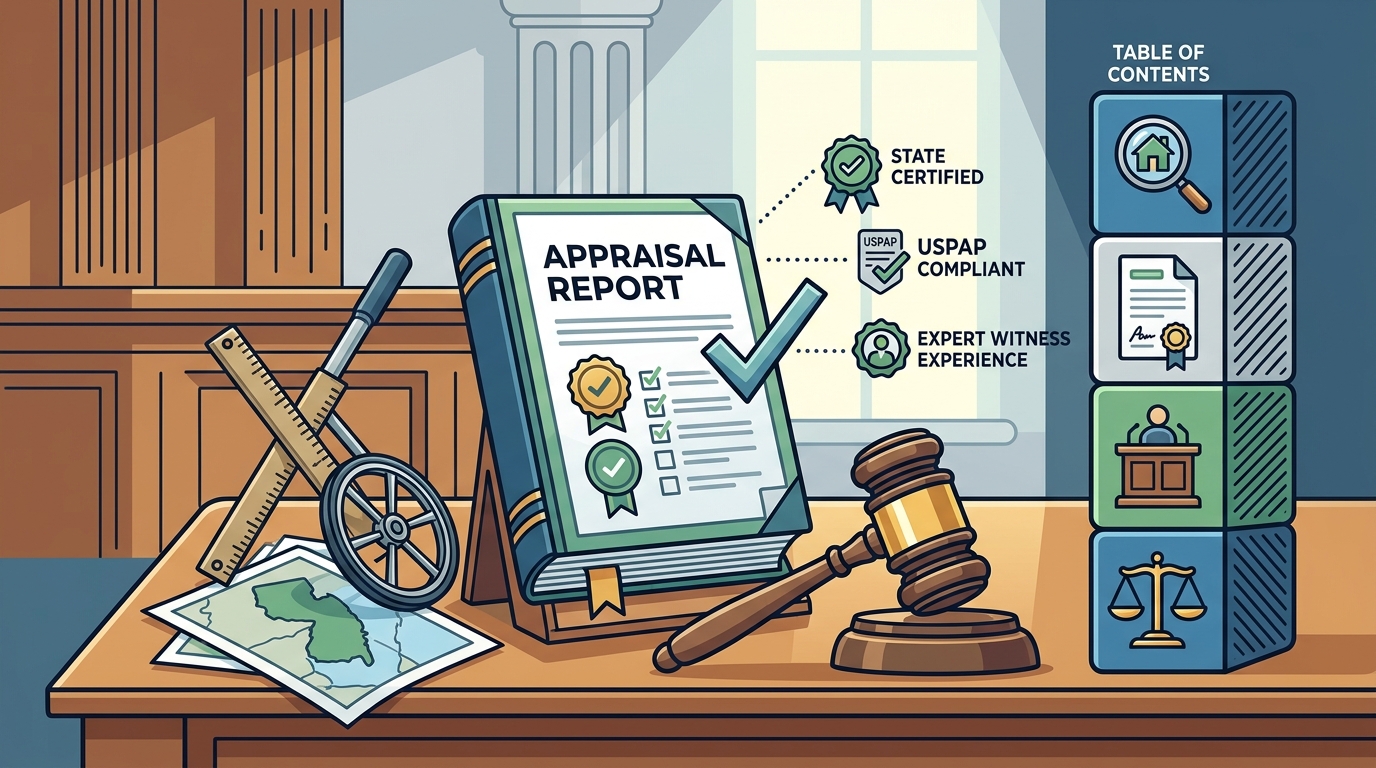
Choosing the right appraiser for litigation in New Jersey requires verifying state certification, USPAP compliance, and specific expert witness experience. New Jersey Real Estate Appraisal Group (NJREAG) provides court-ready, defensible valuations that withstand cross-examination. This guide covers the critical factors that determine whether an appraisal report will be accepted by a judge or rejected as inadmissible evidence.
Comparable Sales Analysis
Comparable sales analysis is the primary method used to determine market value in residential real estate litigation. In New Jersey, the strength of an appraisal often depends on the selection and adjustment of these comparables. A court-ready appraisal must use arm's-length sales that are truly similar to the subject property in location, size, age, and condition.
Selection Criteria for Litigation
When preparing for court, appraisers must document why specific sales were chosen. This includes explaining the radius of the search area and the time frame of the sales. For example, in a divorce case, the effective date of the valuation is critical. The appraiser must use sales that occurred near that specific date to support the value conclusion.
Adjustment Logic
Adjustments for differences between the subject property and comparables must be logical and supported by market data. If an appraiser adjusts for a garage or a renovated kitchen, they must provide evidence of what those features are worth in the local market. Vague or unsupported adjustments are a common reason for reports to fail under cross-examination.
Expert Witness Qualifications
Expert witness qualifications refer to the education, training, and experience that allow a professional to offer an opinion in court. Under the Federal Rules of Evidence and New Jersey Rules of Evidence, an expert must be qualified by knowledge, skill, experience, training, or education. For real estate appraisers, this usually means a state certification and significant experience in the specific type of property being valued.
Disclosure Requirements
Parties must disclose their expert witnesses and provide a detailed report of their qualifications. This includes a list of cases where the expert has testified, their educational background, and any publications. Failure to properly disclose an expert can result in the exclusion of their testimony.
USPAP Compliance
USPAP compliance is the adherence to the Uniform Standards of Professional Appraisal Practice. USPAP is the national standard for appraisal practice in the United States. In litigation, a report that does not comply with USPAP may be deemed unreliable and inadmissible. Judges and opposing counsel will look for clear statements of the standards used and the scope of work performed.
Scope of Work
The scope of work defines the data collected and the analysis performed. In a litigation context, the scope must be sufficient to support the value conclusion. This often includes a detailed interior and exterior inspection, even if the property is vacant or in poor condition. A limited scope of work may be appropriate for certain assignments, but it must be clearly defined and justified.
State Certification Levels
State certification levels indicate the level of training and experience an appraiser has completed. In New Jersey, appraisers can be licensed or certified. A certified appraiser has completed more hours of education and has more experience than a licensed appraiser. For complex litigation matters, a certified appraiser is generally preferred because they have demonstrated a higher level of competence.
Residential vs. General Certification
Residential certification allows an appraiser to value single-family homes and condominiums. General certification allows an appraiser to value all types of real property, including commercial, industrial, and agricultural. If the property in dispute is a commercial building, a general certified appraiser is required. Using a residential certified appraiser for a commercial property would be a disqualifying error.
Litigation Appraisal Methodology
Litigation appraisal methodology is the specific approach used to develop a value opinion for legal proceedings. This often involves a retrospective valuation, which determines the value of a property as of a past date. For example, in a divorce case, the value is often determined as of the date of separation or the date of the trial. The appraiser must use market data from that specific time period, not current market conditions.
Retrospective Valuation Challenges
Retrospective valuations are more complex than current valuations because the appraiser must reconstruct the market conditions of the past. This requires access to historical sales data and an understanding of how the market has changed over time. The appraiser must document their research process and explain how they arrived at the value for the past date.
Cross Examination Defensibility
Cross examination defensibility is the ability of an appraisal report to withstand questioning by opposing counsel. A defensible report is one where every conclusion is supported by evidence, and every assumption is clearly stated. Appraisers who are not prepared for cross-examination may appear evasive or inconsistent, which can damage their credibility with the judge.
Common Areas of Attack
Opposing counsel often attacks the selection of comparables, the adjustments made, and the appraiser's qualifications. They may also question the appraiser's independence and whether they have a financial interest in the outcome. A well-prepared appraiser will have a thorough understanding of their report and be able to explain their reasoning clearly and confidently.
Litigation Report Documentation
Litigation report documentation is the formal record of the appraisal process and the value conclusion. In court, the report must be detailed enough to allow the judge and the opposing party to understand how the value was determined. This includes a clear statement of the problem, the scope of work, the data collected, the analysis performed, and the final value conclusion.
Clarity and Organization
A well-organized report is easier to understand and more likely to be accepted by the court. The report should use clear language and avoid jargon where possible. It should also include supporting documentation, such as photographs, maps, and sales data. The goal is to make the report self-explanatory, so that the judge can follow the appraiser's logic without needing to ask for clarification.
State Certification Requirements
State certification requirements are the specific rules set by the state's appraisal board that an appraiser must meet to be certified. In New Jersey, these requirements include completing a certain number of hours of education, gaining a certain amount of experience, and passing a state exam. The requirements for certification are more stringent than those for a license, reflecting the higher level of responsibility that comes with certifying complex properties.
Continuing Education
Certified appraisers must complete continuing education to maintain their certification. This ensures that they stay up-to-date with changes in appraisal standards, laws, and market conditions. In litigation, an appraiser's continuing education history can be used to demonstrate their commitment to professional development and their knowledge of current best practices.
Certified Appraiser Credentials
Certified appraiser credentials are the formal recognitions that an appraiser has earned through education and experience. These credentials include the state certification, as well as any additional designations, such as the Accredited Senior Appraiser (ASA) or the Certified General Appraiser (CGA). These credentials can enhance an appraiser's credibility in court by demonstrating their expertise in specific areas of appraisal.
Professional Memberships
Membership in professional organizations, such as the Appraisal Institute, can also be a positive factor in establishing an appraiser's qualifications. These organizations require members to adhere to a code of ethics and to complete continuing education. They also provide opportunities for appraisers to network with other professionals and to stay informed about industry trends.
Expert Witness Qualification
Expert witness qualification is the legal standard that determines whether an appraiser can testify in court. This standard is based on the Daubert or Frye test, depending on the jurisdiction. In New Jersey, the Daubert test is used, which requires the expert's testimony to be relevant and reliable. The judge acts as a gatekeeper, ensuring that the expert's methods are scientifically valid and that they have been applied reliably to the facts of the case.
Reliability of Methods
The reliability of the appraiser's methods is a key factor in determining their qualification. The appraiser must be able to explain how their methods are used in the appraisal profession and why they are appropriate for the specific property in question. They must also be able to identify the limitations of their methods and explain how they have addressed those limitations in their report.
Litigation Experience
Litigation experience is the practical knowledge an appraiser gains from testifying in court and preparing reports for legal proceedings. This experience is crucial because it teaches the appraiser how to present their findings in a way that is clear and persuasive to a judge. An appraiser with extensive litigation experience will be better prepared for cross-examination and will be more likely to have their report accepted by the court.
Track Record of Testimony
An appraiser's track record of testimony can be a strong indicator of their qualifications. This includes the number of cases they have testified in, the types of cases, and the outcomes of those cases. While the outcome of a case is not a direct measure of the appraiser's competence, a consistent record of having their reports accepted by the court can be a positive factor.
Key Takeaways
- Choose an appraiser with state certification appropriate for the property type.
- Ensure the appraiser is USPAP compliant and can explain their methodology.
- Verify the appraiser's experience as an expert witness in litigation.
- Review the appraiser's comparable sales analysis for logic and support.
- Check the appraiser's continuing education and professional memberships.
- Confirm the appraiser's ability to withstand cross-examination.
- Request a sample report to assess the quality of documentation.
- Consult with your attorney to ensure the appraiser meets the court's requirements.
Frequently Asked Questions
What is the difference between a licensed and a certified appraiser?
A licensed appraiser has completed fewer hours of education and has less experience than a certified appraiser. Certified appraisers are qualified to value more complex properties, including commercial real estate.
Do I need a certified appraiser for a divorce case?
While a licensed appraiser may be sufficient for a simple residential property, a certified appraiser is often preferred for divorce cases due to the complexity of the valuation and the need for a defensible report.
How long does it take to complete a litigation appraisal?
The time required depends on the complexity of the property and the availability of data. A typical residential appraisal may take 5 to 10 business days, while a complex commercial appraisal may take several weeks.
Can I use an appraisal from a previous year for my current case?
Generally, no. A litigation appraisal must be developed as of a specific effective date. An appraisal from a previous year may not reflect current market conditions and may not be admissible in court.
What happens if the appraiser is not qualified?
If the appraiser is not qualified, their testimony may be excluded by the judge. This can result in a delay in the case and may require the party to hire a new appraiser.
How much does a litigation appraisal cost?
The cost of a litigation appraisal varies depending on the property type, location, and complexity. It is typically higher than a standard mortgage appraisal due to the additional time and effort required to prepare a court-ready report.
Conclusion
Selecting the right appraiser for your New Jersey litigation is a critical decision that can impact the outcome of your case. By choosing a state-certified, USPAP-compliant appraiser with proven expert witness experience, you ensure that your valuation is credible and defensible. New Jersey Real Estate Appraisal Group (NJREAG) specializes in providing court-ready appraisals that meet the highest standards of professional practice. To discuss your specific appraisal needs, today.