

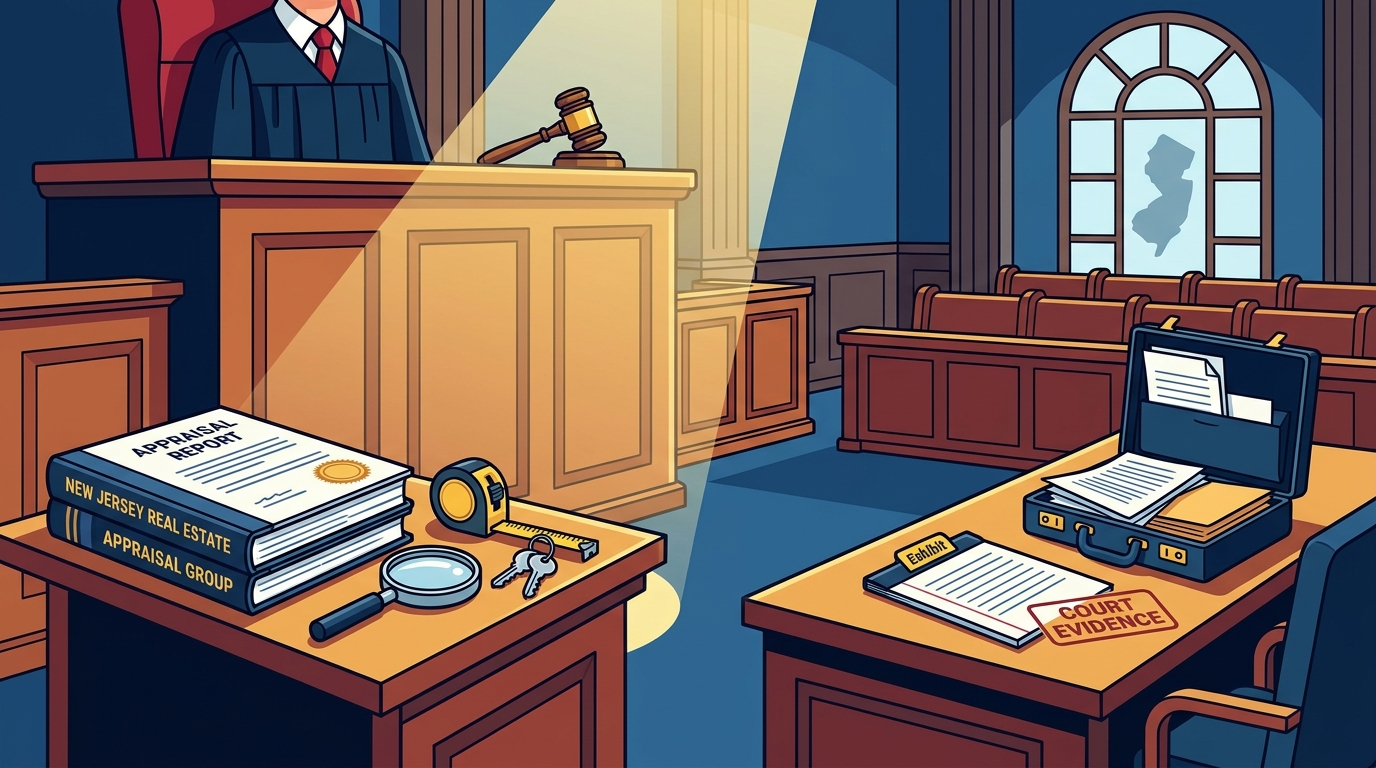
When an appraiser testifies as an expert witness in New Jersey court, they provide a professional opinion on property value based on rigorous, defensible methodology. This testimony is not a casual estimate but a formal legal contribution governed by strict evidentiary standards. New Jersey Real Estate Appraisal Group (NJREAG) prepares state-certified appraisers to meet these high standards, ensuring that valuation opinions withstand cross-examination and support equitable outcomes in litigation, divorce, and estate matters.
The Legal Framework for Expert Testimony
Expert witness testimony in New Jersey is governed by both state rules and federal standards that ensure only qualified professionals offer opinions on complex technical issues. An expert witness is a person with specialized knowledge, skills, education, or experience in a particular field who is called upon to provide their expertise in legal proceedings to assist the court with understanding complex technical or scientific issues. Under the Federal Rules of Evidence, specifically Rule 702, a witness qualified as an expert by knowledge, skill, experience, training, or education may testify in the form of an opinion if the proponent demonstrates to the court that it is more likely than not that the testimony is based on sufficient facts or data. This legal threshold means that an appraiser cannot simply state a number; they must explain the foundation of their analysis.
In New Jersey, the admissibility of expert testimony also relies on the Daubert standard, which requires that the methodology used by the expert be reliable and relevant to the case. For real estate appraisers, this means adhering to the Uniform Standards of Professional Appraisal Practice (USPAP). Because where the law requires an appraisal be done, such as in most states for probate, the professional must act as an appraiser and follow USPAP. If an appraiser is asked to review another report as an expert witness, they are also acting under USPAP Standard Rules 3 and 4, which govern appraisal review. This dual compliance with legal evidence rules and professional appraisal standards is what makes the testimony credible to the judge or jury.
Preparation and Qualification Requirements
Courts scrutinize the qualifications of expert witnesses before allowing them to testify. In New Jersey, real estate appraisers are regulated by the State Real Estate Appraiser Board under the Division of Consumer Affairs, which enforces strict licensing tiers. The level of license an appraiser holds directly determines the scope of properties they can legally appraise and testify about. For example, a Certified General appraiser can appraise all types of real property, while a Licensed Residential appraiser is limited to specific residential assignments. Verifying an appraiser's current, appropriate credential is essential to ensure compliance, accuracy, and courtroom reliability.
Preparation for testimony involves more than just writing a report. It requires the appraiser to be ready to explain their methodology, defend their comparable sales selection, and respond to challenges from opposing counsel. The Appraisal Institute emphasizes that appraisers must understand how they add value to attorneys in litigation matters and know how to present their opinions in both written reports and oral testimony. This preparation includes reviewing the entire case file, understanding the legal issues at stake, and anticipating the questions that opposing experts or attorneys might ask. An appraiser who is not prepared to defend their work may have their testimony excluded or their credibility damaged.
The Testimony Process in Court
The process of testifying as an expert witness typically follows a structured sequence that begins with direct examination and moves to cross-examination. During direct examination, the attorney who retained the appraiser asks questions that allow the expert to explain their qualifications, the scope of their work, and their final opinion of value. The appraiser must speak clearly and avoid jargon that might confuse the judge or jury. They should explain concepts like market value, comparable sales, and adjustments in plain language. according to expert witness Wex
Cross-examination is where the testimony is truly tested. The opposing attorney will challenge the appraiser's methodology, the data they used, and the logic behind their adjustments. This is a high-pressure environment where the appraiser must remain calm, professional, and consistent with their written report. Any discrepancy between the written report and the oral testimony can be used to impeach the expert's credibility. New Jersey courts expect appraisers to be objective and unbiased, so any language in the report or testimony that appears to favor one party over the other can undermine admissibility. The goal is not to win an argument but to provide the court with a reliable, fact-based opinion that helps them make an informed decision.
Common Pitfalls and How to Avoid Them
One of the most common pitfalls in expert witness testimony is the use of advocacy language. Appraisers are often retained by one party, but their role is to provide an unbiased opinion, not to advocate for that party's position. Using language that suggests the property is worth more or less than it actually is, based on the client's desires rather than market evidence, can lead to the testimony being rejected. Another pitfall is failing to document the scope of work and the effective date of the valuation. In New Jersey divorce cases, for example, the valuation date is critical and is often determined by the court based on specific facts, such as the filing date or the trial date. Choosing the wrong date can require a full redo of the appraisal and damage the expert's credibility. according to Rule 702 Testimony
Unpermitted work is another significant issue. If a property has undergone renovations that were not permitted by local authorities, the appraiser must handle this carefully. Undocumented improvements can trigger downward adjustments or legal disputes. Only permitted work with receipts and dated photos can be isolated in a before-and-after analysis. Failing to address these issues properly can lead to challenges from opposing counsel and potential liability for the appraiser. By anticipating these pitfalls and addressing them in the report and testimony, appraisers can protect their credibility and ensure that their opinions are accepted by the court.
Key Takeaways
- Expert witness testimony in New Jersey is governed by strict legal standards, including Rule 702 and the Daubert standard, which require reliable methodology and sufficient data.
- Appraisers must hold the appropriate state license for the type of property they are appraising, as licensing tiers determine the scope of legal assignments.
- Preparation for testimony involves more than writing a report; it requires readiness to defend methodology and respond to cross-examination.
- Objectivity is paramount; using advocacy language or favoring one party can undermine the admissibility of the testimony.
- The effective date of the valuation is critical in legal cases, and choosing the wrong date can invalidate the appraisal.
- Proper documentation of permits, receipts, and comparable sales is essential to support the appraiser's opinion and withstand legal challenges.
Frequently Asked Questions
What federal law governs appraisers in New Jersey?
FIRREA Title XI mandates that all federally related real estate transactions use state-licensed or state-certified appraisers who apply USPAP standards. This covers most mortgage lending activity and ensures that appraisals meet federal requirements.
What is USPAP and is it legally required?
USPAP is the national baseline for appraisal practice, covering ethics, competency, and reporting standards. It is legally required for appraisals to be credible and admissible in court, as it ensures that appraisers follow a consistent, professional methodology. according to Uniform Standards of
Can a licensed residential appraiser appraise commercial property in NJ?
No, a licensed residential appraiser is limited to specific residential assignments. To appraise commercial property, an appraiser must hold a Certified General license, which allows them to appraise all types of real property.
How do I verify an NJ appraiser's credentials?
You can verify an appraiser's credentials through the New Jersey Real Estate Appraiser Board, which maintains a public database of licensed and certified appraisers. It is important to confirm that the license is active and appropriate for the type of property being appraised.
Are Fannie Mae appraisal requirements separate from USPAP?
Yes, Fannie Mae and other lenders impose additional compliance obligations that go beyond USPAP. These requirements include specific reporting formats and data standards that must be met for the appraisal to be accepted for lending purposes. according to ISA Blog USPAP
Conclusion
Testifying as an expert witness in New Jersey court is a serious responsibility that requires deep expertise, rigorous preparation, and strict adherence to legal and professional standards. New Jersey Real Estate Appraisal Group (NJREAG) provides state-certified appraisers who are experienced in litigation, divorce, and estate matters, ensuring that their testimony is defensible and credible. If you are facing a property valuation dispute in court, it is essential to work with an appraiser who understands the legal framework and is prepared to present their opinion effectively. To discuss your specific appraisal needs, for a consultation.