
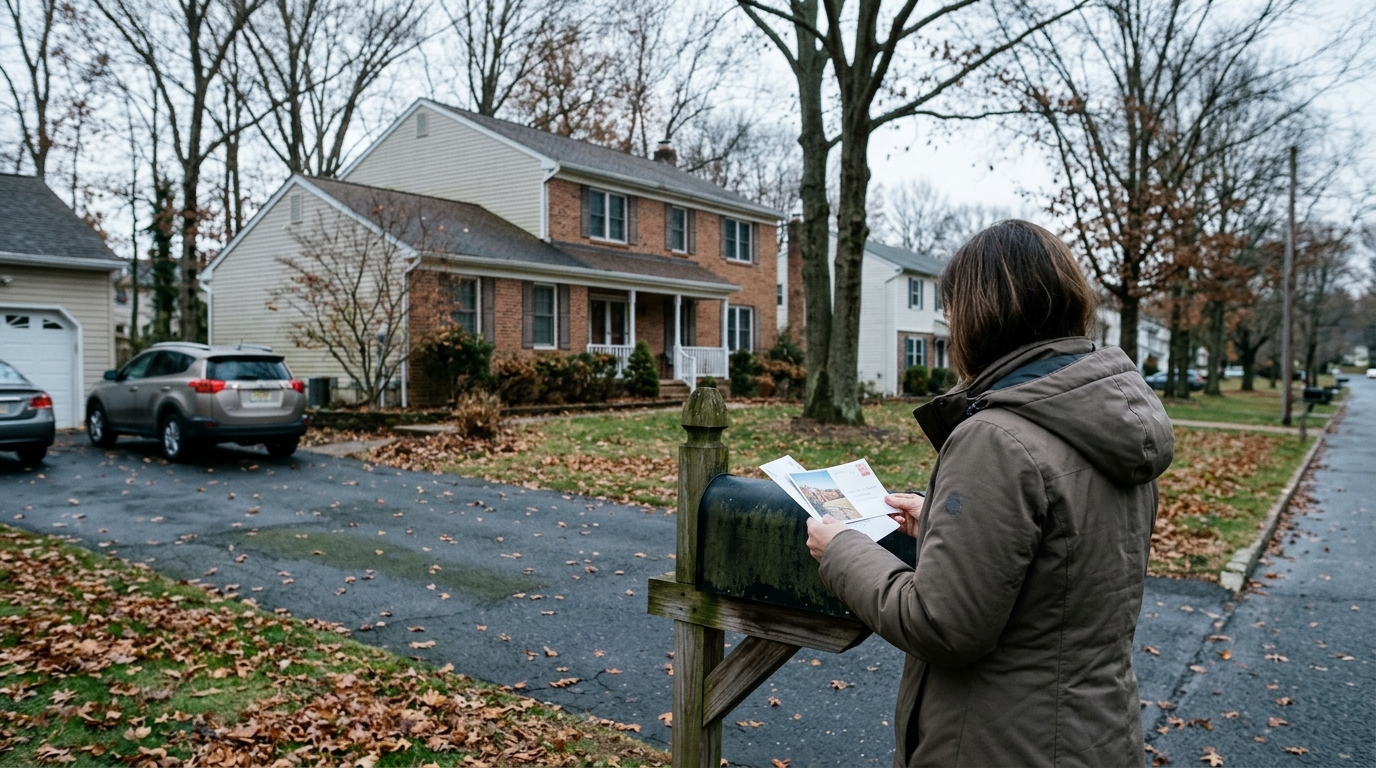
Start your property tax appeal immediately after receiving your assessment notice, typically in November or February. New Jersey deadlines are strict, and missing the filing window by even one day can cost you the entire appeal year. New Jersey Real Estate Appraisal Group (NJREAG) advises homeowners to begin gathering evidence and scheduling inspections as soon as the postcard arrives to ensure a defensible, timely filing.
The Critical Role of the Assessment Date
Property tax appeals in New Jersey are not about today's market value; they are about the value on a specific historical date. The assessment date is October 1 of the pre-tax year. For a 2027 tax appeal, the relevant value date is October 1, 2026. This means that comparable sales used to support your case must be close to that date. If you wait until the hearing date in spring to start your research, you may find that the most relevant sales data is already outdated or difficult to justify. Starting early allows you to build a timeline of market evidence that aligns perfectly with the statutory valuation date.
Understanding County-Specific Deadlines
While many New Jersey counties use an April 1 deadline, several major counties operate on different schedules. Burlington, Gloucester, and Monmouth counties use a January 15 deadline. Somerset County typically uses a May 1 deadline for most towns. Knowing your specific county's deadline is the first step in maximizing your chances of success. For example, in Gloucester County, assessment postcards are mailed by November 15, giving owners roughly two months to act before the January 15 cutoff. If you miss this window, you cannot appeal at the county level until the following year. New Jersey Real Estate Appraisal Group (NJREAG) helps clients navigate these varying timelines to ensure no opportunity is lost due to administrative confusion.
The Evidence Preparation Timeline
Success in a tax appeal depends on credible evidence, not just a desire to lower taxes. The county tax board requires three to five arm's-length comparable sales to support your valuation. These comparables must be verified, and the appraiser must be prepared to testify at the hearing. If you rely on a written appraisal, the appraiser must be present for cross-examination. This requirement means you cannot simply file a report and walk away. You need to start the appraisal process early enough to allow for a thorough inspection, data analysis, and report writing. Most certified appraisers require 5 to 7 business days for a standard report, but complex cases or retrospective valuations can take longer. Starting in November or December ensures you have a completed, court-ready report well before the evidence submission deadline, which is typically seven days before the hearing.
Revaluation Towns and Special Rules
Some towns are undergoing revaluations or reassessments, which changes the rules of the game. In a revaluation town, assessments are supposed to equal 100% of market value. This means the appeal is no longer about the ratio test but about whether the new value is supported by comparable sales. For instance, in Bergen County, 36 municipalities have revaluations or reassessments for 2026. If your town is on this list, the deadline may shift to May 1. Additionally, in revaluation towns, the burden of proof is heavier because the baseline is full market value. Starting your appeal early in these towns is crucial because the volume of appeals can be high, and hearings may be scheduled later in the year. New Jersey Real Estate Appraisal Group (NJREAG) specializes in these complex scenarios, ensuring that your valuation is defensible against the new 100% assessment standard.

Why Waiting Until the Last Minute Fails
Homeowners often wait until the deadline to file, assuming they can rush the process. This approach is risky for several reasons. First, appraisal appointments fill up quickly in the weeks before major deadlines. Second, if your initial appraisal comes in higher than expected, you have no time to challenge it or request a review. Third, the tax board may reject late filings or incomplete evidence. In Middlesex County, for example, appeals must be physically received by the board, and mail postmarked on the deadline but received later will be rejected. By starting early, you create a buffer for unexpected issues, such as weather delays for inspections or data discrepancies. This proactive approach transforms the appeal from a stressful scramble into a managed, strategic process. New Jersey Real Estate Appraisal Group (NJREAG) emphasizes that timing is as important as the valuation itself in determining the final outcome.
Key Takeaways
- Start your appeal process immediately after receiving your assessment notice, usually in November or February.
- Know your county's specific deadline, as Burlington, Gloucester, and Monmouth use January 15, while Somerset often uses May 1.
- Comparable sales must align with the October 1 assessment date, so early research is critical.
- Appraisers must be present at hearings to testify, so schedule your appraisal well in advance.
- Revaluation towns have different rules and may require a May 1 deadline, increasing the need for early preparation.
- Waiting until the last minute risks missing physical receipt deadlines and leaves no buffer for errors.
Frequently Asked Questions
What is the general deadline for property tax appeals in New Jersey?
Most New Jersey counties have an April 1 deadline for filing property tax appeals. However, some counties like Burlington, Gloucester, and Monmouth use a January 15 deadline, and Somerset County often uses May 1. Always check your specific county's board of taxation for the exact date.
Can I appeal if I miss the deadline?
Generally, no. If you miss the county deadline, you cannot appeal at the county level until the following year. However, properties assessed over $1 million may be able to appeal directly to the State Tax Court by April 1, even if the county deadline has passed.
How long does it take to get an appraisal for a tax appeal?
A standard certified appraisal typically takes 5 to 7 business days to complete. However, complex cases or those requiring retrospective analysis may take longer. It is best to schedule your appraisal at least two to three weeks before the evidence submission deadline.
Do I need an appraiser to be present at the hearing?
Yes, if you submit a written appraisal as evidence, the appraiser must be present at the hearing to testify and be cross-examined. If the appraiser is not present, the appraisal may not be considered by the tax board.
What happens in a revaluation town?
In a revaluation town, assessments are set at 100% of market value. This means the appeal focuses on whether the new value is supported by comparable sales, rather than the ratio test. The deadline in these towns is often May 1 instead of April 1.
How much does a tax appeal appraisal cost?
Costs vary based on the property type and complexity. Most residential assignments in New Jersey range from $495 to $750. New Jersey Real Estate Appraisal Group (NJREAG) provides firm quotes for all assignments, so you can budget accordingly.
Start Your Appeal with Confidence
Timing is the most critical factor in a successful property tax appeal. By starting early, you ensure that your evidence is robust, your appraisal is defensible, and your filing is timely. New Jersey Real Estate Appraisal Group (NJREAG) provides state-certified, USPAP-compliant appraisals that are written to hold up in court. Whether you are in a revaluation town or a standard ratio town, our team helps you navigate the deadlines and evidence requirements. To plan your visit, contact our team today to get a firm quote and secure your inspection slot before the deadline passes. Learn more: Contact NJREAG Certified Appraisers.