
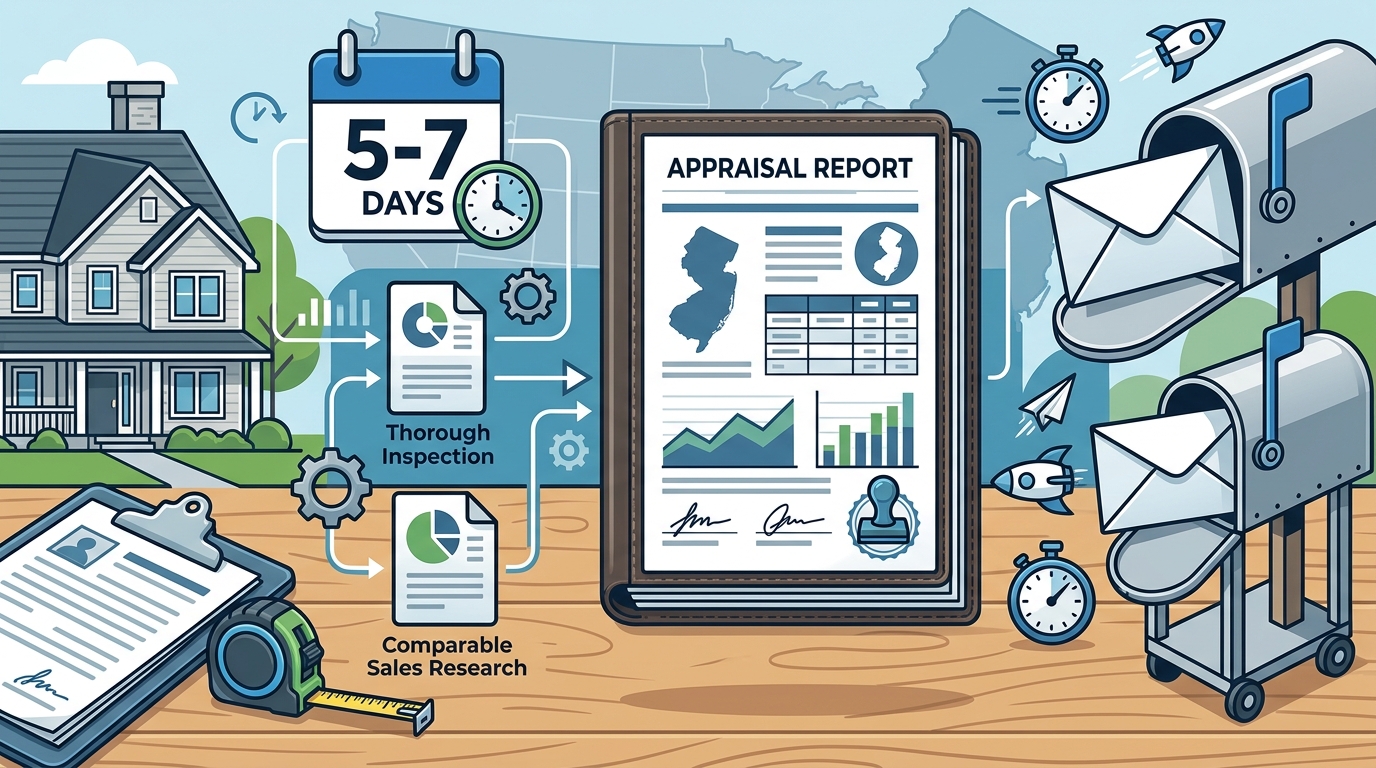
Most homeowners in New Jersey can expect a complete, court-ready appraisal report within 5 to 7 business days after the property inspection. This timeline allows state-certified appraisers to conduct a thorough physical inspection, research comparable sales, and prepare a USPAP-compliant document. New Jersey Real Estate Appraisal Group (NJREAG) provides this standard turnaround while offering rush services for urgent legal or financial needs. This guide details the specific phases of the appraisal process, the factors that influence speed, and how to prepare your property for a faster valuation.
The Standard Appraisal Timeline
The total duration of a real estate appraisal is the sum of scheduling, inspection, and report writing. For a standard residential home sale in New Jersey, the entire process typically spans one to two weeks. A real estate appraisal is a professional opinion of value prepared by a state-certified appraiser based on market data and physical inspection. The timeline begins when you or your lender schedules the appointment. Scheduling usually takes 2 to 3 business days, depending on the appraiser's current workload and the property's location. Once the inspection is complete, the clock starts for the report writing phase. NJREAG maintains a standard turnaround time of 5 to 7 business days following the inspection. This period ensures that the valuation is not only fast but also defensible in court or with lending institutions. For clients with strict deadlines, such as those in divorce proceedings or estate settlements, rush services are often available to compress this timeline.
Property Inspection Duration and Scope
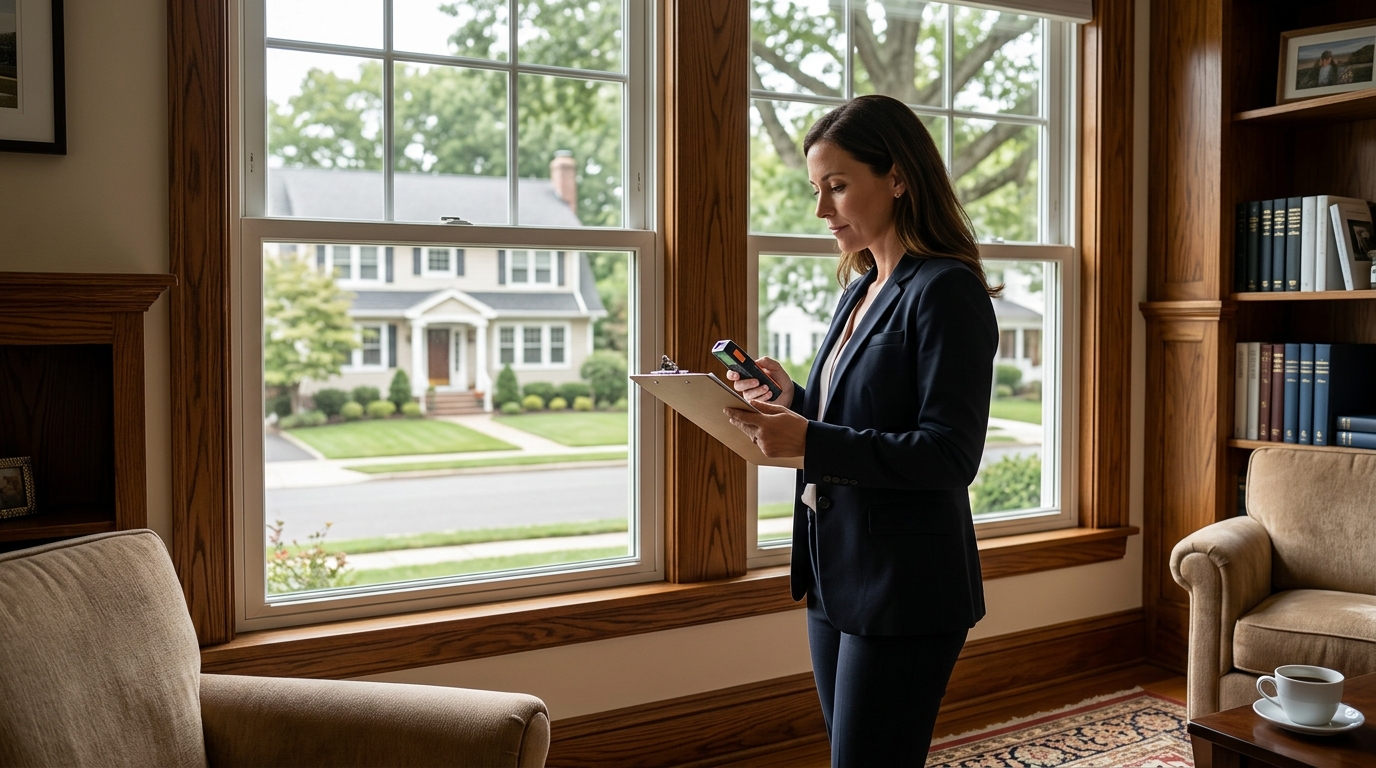
The physical inspection is the most time-sensitive component of the appraisal process. For a typical single-family home, the inspection itself lasts between 30 and 60 minutes. Complex properties, such as multi-family units or commercial buildings, may require longer visits. The appraiser must document the property's condition, size, and features to support the value opinion. This includes measuring living areas, assessing the quality of construction, and noting any unique characteristics. The inspection is not a home inspection; it does not identify safety hazards or mechanical failures. Instead, it focuses on how the property's physical attributes affect its market value. Proper preparation can help the appraiser complete the visit efficiently. Ensuring that all areas of the home are accessible, including attics, basements, and crawlspaces, prevents delays. If the appraiser cannot access key areas, they may need to schedule a second visit, which adds time to the overall process.
What the Appraiser Looks For
Report Completion and Delivery
After the inspection, the appraiser begins the analysis and report writing phase. This is where the bulk of the intellectual work occurs. The appraiser researches recent comparable sales in the local market. They analyze market trends, supply and demand conditions, and economic factors. The report must comply with the Uniform Standards of Professional Appraisal Practice (USPAP). A USPAP-compliant appraisal is a valuation report that meets the ethical and performance standards set by the Appraisal Foundation. This compliance ensures the report is credible and defensible. Writing a detailed report typically takes 3 to 5 business days. The appraiser must reconcile the three approaches to value: the sales comparison approach, the cost approach, and the income approach. For residential properties, the sales comparison approach is usually the primary method. The final report includes the appraiser's signature, certification, and a clear statement of value. NJREAG delivers reports in digital format, allowing for quick submission to lenders, courts, or attorneys. Electronic delivery eliminates mailing delays and ensures the client receives the document promptly.
Types of Reports
There are different levels of appraisal reports, which can affect the timeline. A full narrative report provides the most detailed analysis and may take longer to prepare. A restricted or summary report is shorter and may be completed more quickly. The type of report required depends on the purpose of the appraisal. Lenders often require a full narrative report for mortgage transactions. Courts and attorneys may accept a restricted report for certain legal matters. It is important to specify the required report type when scheduling the appraisal. This ensures the appraiser allocates the appropriate time for the task. NJREAG offers various report formats to meet the specific needs of homeowners, attorneys, and lenders.
Factors That Affect Appraisal Speed
Several variables can influence how quickly you receive your appraisal report. Understanding these factors helps you manage expectations and prepare your property effectively. The most common factors include property complexity, market conditions, and appraiser availability. Each of these elements plays a role in determining the final turnaround time.
Property Complexity and Type
The type of property being appraised significantly impacts the timeline. A standard single-family home is the fastest to appraise. Multi-family properties, commercial buildings, and vacant land require more complex analysis. Multi-family properties involve income analysis, which takes additional time. Commercial properties may require a review of lease agreements and financial statements. Vacant land appraisals depend heavily on zoning and development potential, which can be difficult to assess quickly. If your property is complex, expect a longer turnaround time. NJREAG has experience with all property types and can provide a realistic timeline based on the specific assignment.
Market Conditions and Data Availability
The local real estate market also affects appraisal speed. In a high-volume market, there is an abundance of comparable sales data. This makes the analysis process faster and more straightforward. In a low-volume market, finding appropriate comparables can be challenging. The appraiser may need to search a wider geographic area or use older sales data. This additional research can extend the report completion time. Market volatility can also impact the timeline. If prices are changing rapidly, the appraiser must ensure the data is current. This requires extra diligence and may add a day or two to the process. Despite these challenges, a state-certified appraiser will always prioritize accuracy over speed.
Appraiser Availability and Scheduling
The availability of the appraiser is a practical factor that affects the start of the process. Popular appraisers may have a backlog of assignments. Scheduling an inspection may take longer during peak seasons, such as spring and summer. It is advisable to schedule the appraisal as early as possible in the transaction process. This allows for any unexpected delays. NJREAG serves all counties in New Jersey and maintains a team of certified appraisers. This network helps ensure that appointments can be scheduled promptly, even in busy markets. By choosing a local firm with statewide coverage, you benefit from better scheduling flexibility.
Comparison of Appraisal Timelines
| Property Type | Inspection Duration | Report Completion | Total Estimated Time |
|---|---|---|---|
| Single-Family Home | 30-60 minutes | 3-5 business days | 5-7 business days |
| Multi-Family Property | 1-2 hours | 5-7 business days | 7-10 business days |
| Commercial Property | 1-2 hours | 7-10 business days | 10-14 business days |
| Vacant Land | 30-45 minutes | 5-7 business days | 7-10 business days |
Key Takeaways
- Standard residential appraisals in New Jersey typically take 5 to 7 business days after inspection.
- The physical inspection itself usually lasts 30 to 60 minutes for a single-family home.
- Report writing and analysis account for the majority of the turnaround time.
- Complex properties like multi-family or commercial buildings take longer to appraise.
- Market conditions and data availability can influence the speed of the analysis.
- Proper property preparation, including access to all areas, prevents delays.
- Rush services are available for urgent legal or financial needs.
- Choosing a local, state-certified appraiser ensures compliance and reliability.
Frequently Asked Questions
How long does it take to get an appraisal report in New Jersey?
Most appraisal reports are completed within 5 to 7 business days after the property inspection. This timeline allows for thorough research and USPAP-compliant reporting. Rush services may be available for urgent situations.
Can I get an appraisal faster than 5 days?
Yes, rush services are often available for an additional fee. This option is suitable for clients with strict deadlines, such as those in divorce or estate proceedings. Contact the appraisal firm to discuss rush availability.
What happens if the appraiser cannot access the property?
If the appraiser cannot access key areas of the property, they may need to schedule a second visit. This can delay the report by several days. Ensure that all areas, including attics and basements, are accessible on the day of the inspection.
Is an appraisal the same as a home inspection?
No, an appraisal is a valuation of the property's market value. A home inspection identifies safety and mechanical issues. An appraisal does not replace a home inspection and does not identify defects.
Who pays for the appraisal in a home sale?
In a traditional mortgage transaction, the buyer typically pays for the appraisal. In other situations, such as tax appeals or estate settlements, the property owner or client usually pays. The cost varies based on the property type and complexity.
Do I need to be present during the appraisal?
You do not need to be present, but it is helpful if you can provide access to the property. You should ensure that the appraiser can enter the home and access all areas. If you are not available, arrange for someone to let the appraiser in.
How accurate is an appraisal?
An appraisal is an opinion of value, not a guarantee of sale price. It is based on market data and professional analysis. While it is a reliable estimate, the final sale price may vary based on negotiation and market conditions.
Can I challenge an appraisal if I disagree with the value?
Yes, you can request a review or a second appraisal. If you believe the value is incorrect, you can provide additional evidence to the appraiser or lender. A second appraisal may be required to resolve the dispute.
Conclusion
Understanding the appraisal timeline helps you plan your home sale or legal matter effectively. The standard 5 to 7 business day turnaround for residential properties in New Jersey balances speed with accuracy. By preparing your property and choosing a reputable, state-certified appraiser, you can ensure a smooth and timely process. New Jersey Real Estate Appraisal Group (NJREAG) offers fast, reliable, and USPAP-compliant appraisals for homeowners, attorneys, and lenders across the state. To get started, for a fast quote and schedule your inspection today.