

Private Mortgage Insurance (PMI) is a significant financial burden for many homeowners, often costing hundreds of dollars monthly. According to the Mortgage Bankers Association, millions of homeowners are still paying for PMI despite having sufficient equity. Removing this insurance is not automatic; it requires proactive steps, accurate documentation, and often, a professional property valuation. This guide outlines the precise process for New Jersey homeowners to eliminate PMI, leveraging state-certified appraisals to prove your home's value. (About NJREAG New Jersey)
Understanding PMI and Federal Requirements
Private Mortgage Insurance protects the lender, not the borrower, in case you default on your loan. It is typically required when your down payment is less than 20% of the home's purchase price. While it adds to your monthly costs, it also allows you to enter the market with less capital upfront.
The Homeowners Protection Act (HPA) of 1998 established federal guidelines for PMI cancellation. However, these rules are strict. Borrowers cannot simply assume their insurance will drop off. You must meet specific equity thresholds and demonstrate that the property value has not declined. For New Jersey homeowners, understanding these federal baselines is the first step toward financial freedom.
Automatic Termination vs. Requested Cancellation
There are two distinct paths to removing PMI: automatic termination and requested cancellation. Knowing which applies to your loan type is crucial for timing your efforts.
Automatic Termination
For most conventional loans, PMI automatically terminates when the loan balance reaches 78% of the original property value, based on the initial amortization schedule. This occurs at a specific date determined by your loan-to-value ratio at closing. You do not need to take action, but you must be current on your payments.
Requested Cancellation
Requested cancellation allows you to ask your servicer to remove PMI when your loan balance reaches 80% of the original value. This path is common for homeowners who have made extra principal payments or whose homes have appreciated in value. This is where a professional appraisal becomes essential, especially in markets with fluctuating real estate values.
The Critical Role of Professional Appraisals
When you reach the 80% loan-to-value (LTV) threshold, your lender will need proof that your home's current market value supports the removal of insurance. Automated Valuation Models (AVMs) are often insufficient for this purpose because they rely on outdated data or broad algorithms that miss local nuances.
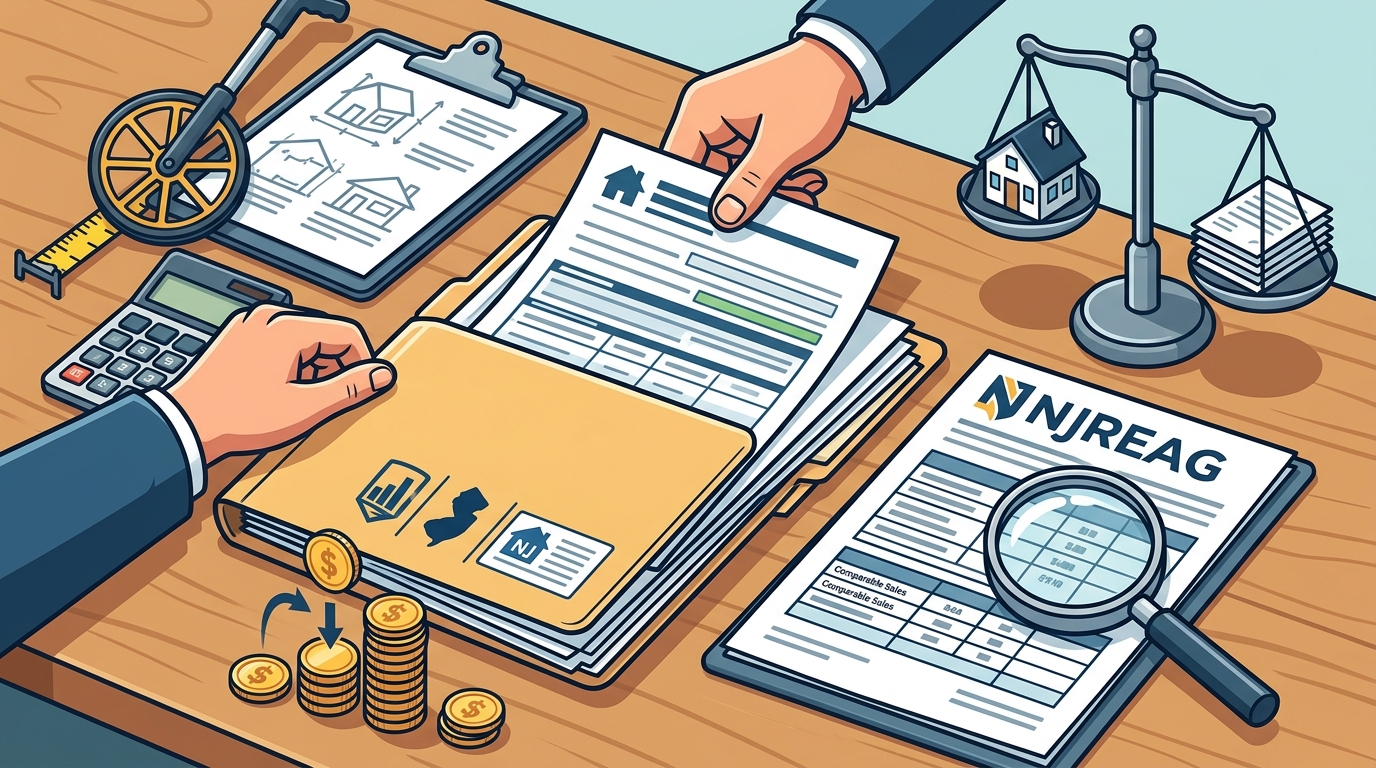
A state-certified appraisal provides a defensible, court-ready opinion of market value. New Jersey Real Estate Appraisal Group delivers USPAP-compliant reports that lenders trust. These reports analyze recent comparable sales, local market trends, and specific property conditions to establish a precise value. Without this professional validation, your request for PMI removal may be denied or delayed.
Step-by-Step: The New Jersey Appraisal Process
Removing PMI in New Jersey involves a coordinated effort between you, your lender, and a certified appraiser. Follow these steps to ensure a smooth process.
Step 1: Review Your Loan Documents
Check your original closing documents for PMI cancellation clauses. Some loans have specific requirements regarding the age of the property or minimum occupancy periods. Ensure you are current on all payments, as lenders will reject requests from borrowers with late payment histories.
Step 2: Contact Your Lender
Reach out to your mortgage servicer to request their specific PMI cancellation form. Ask if they accept third-party appraisals or if they have preferred vendors. While some lenders require their own panel, many accept appraisals from independent, state-certified professionals.
Step 3: Hire a State-Certified Appraiser
Select a qualified appraiser with local expertise. In New Jersey, market conditions vary significantly between counties. An appraiser familiar with your specific region, such as Bergen, Middlesex, or Monmouth County, will provide a more accurate valuation. New Jersey Real Estate Appraisal Group provides state-certified appraisals across all 21 counties, ensuring local accuracy.
Step 4: Schedule the Inspection
The appraiser will visit the property to assess its condition, size, and features. They will also drive by comparable properties sold recently in your neighborhood. This data is critical for establishing your home's current market value.
Step 5: Submit the Report
Once the appraisal is complete, the report is sent directly to your lender. The lender will review the value conclusion. If the new value confirms your equity is at least 20%, they will issue a PMI cancellation letter.
Preparing Your Home for the Inspection
While you cannot change the square footage of your home, you can influence the appraiser's perception of its condition. Proper preparation can help ensure the highest possible valuation.
- Curb Appeal: Mow the lawn, trim bushes, and ensure the exterior is clean. First impressions matter.
- Interior Cleanliness: A clutter-free home allows the appraiser to see the space clearly. Ensure all rooms are accessible.
- Recent Improvements: Compile a list of any upgrades, such as a new roof, HVAC system, or kitchen renovation. Provide receipts if available.
- Repairs: Fix minor issues like leaky faucets or broken tiles. These small defects can negatively impact the final value.
Common Reasons for PMI Rejection
Even with a strong case, PMI removal requests can be denied. Understanding these pitfalls helps you avoid them.
Declining Market Values
If your home's value has decreased since purchase, your equity may not be sufficient. This is common in areas with rapid market shifts. A professional appraisal will reveal this truth early, allowing you to adjust your strategy.
Insufficient Comparable Sales
If there are not enough recent sales of similar homes in your neighborhood, the appraiser may struggle to determine a precise value. This can lead to a conservative valuation that does not meet the 20% equity threshold.
Late Payments
Lenders typically require a history of on-time payments, often 12 months or more, before considering PMI cancellation. Even a single late payment can disqualify you temporarily.
Second Liens
If you have a second mortgage or home equity line of credit (HELOC), the combined loan-to-value ratio must be considered. You may need to pay down the second lien to qualify.
Key Takeaways
- PMI is not automatically removed at 80% equity; you must request cancellation.
- Automatic termination occurs at 78% LTV based on the original amortization schedule.
- A state-certified appraisal is often required to prove current market value.
- New Jersey Real Estate Appraisal Group serves all 21 counties with USPAP-compliant reports.
- Recent home improvements can positively impact your appraisal value.
- Late payments can delay or deny PMI cancellation requests.
- Local market expertise is critical for accurate valuations in New Jersey.
Frequently Asked Questions
How much does a PMI removal appraisal cost in New Jersey?
The cost varies by property type and location, but it is generally a one-time fee that is far less than months of PMI payments. Contact New Jersey Real Estate Appraisal Group for a transparent quote.
Can I use an automated valuation model (AVM) for PMI removal?
Some lenders accept AVMs, but many require a full appraisal for accuracy. A professional appraisal provides a more defensible value, reducing the risk of denial.
How long does the PMI removal process take?
After submitting the appraisal, lenders typically process the request within 10 to 15 business days. The entire process, including scheduling the appraisal, can take 2 to 3 weeks.
Does PMI removal apply to FHA loans?
FHA loans have different rules. Mortgage Insurance Premiums (MIP) for FHA loans are often required for the life of the loan if you put less than 10% down. Refinancing to a conventional loan may be necessary to remove insurance.
What if my appraisal comes in lower than expected?
If the appraisal value is lower, you may need to wait for market appreciation or pay down more principal before reapplying. You can also provide additional comparable sales data to the appraiser for review.
Are appraisals required for all PMI removal requests?
Not always. If your loan balance is near 80% and the market is stable, some lenders may waive the appraisal. However, requesting one proactively is often safer.
How do I find a state-certified appraiser in New Jersey?
Look for appraisers licensed by the New Jersey Real Estate Appraisal Certification Board. New Jersey Real Estate Appraisal Group provides state-certified professionals with local expertise.
Get Your PMI Removal Appraisal Today
Don't let PMI drain your finances any longer. Take control of your mortgage and secure your equity with a professional appraisal. New Jersey Real Estate Appraisal Group offers fast, accurate, and USPAP-compliant valuations to help you remove PMI. Request your appraisal quote now and start saving today.