
USPAP compliance is the legal and ethical framework that ensures real estate appraisals are credible, unbiased, and defensible in court. For multi-family properties in New Jersey, strict adherence to these standards protects owners, lenders, and investors from valuation errors. New Jersey Real Estate Appraisal Group (NJREAG) applies these rigorous criteria to every multi-family assignment to ensure your report holds up under legal and financial scrutiny.
1. Verify the Appraiser's State Certification Level
Multi-family properties require a General Certified Appraiser. In New Jersey, a Residential Certified Appraiser is limited to single-family homes and properties with up to four units. If your property has five or more units, it falls under the General Certified category. NJREAG employs state-certified General Appraisers who are legally qualified to value complex multi-family assets across the state.
2. Confirm the Use of the Income Capitalization Approach
The income approach is the primary valuation method for income-producing properties. USPAP requires appraisers to use the most appropriate valuation approaches for the property type. For multi-family buildings, the Income Capitalization Approach analyzes net operating income and capitalization rates to determine market value. NJREAG focuses on this method to ensure the value reflects the property's income potential rather than just its physical structure.
3. Ensure a Physical Inspection of the Property
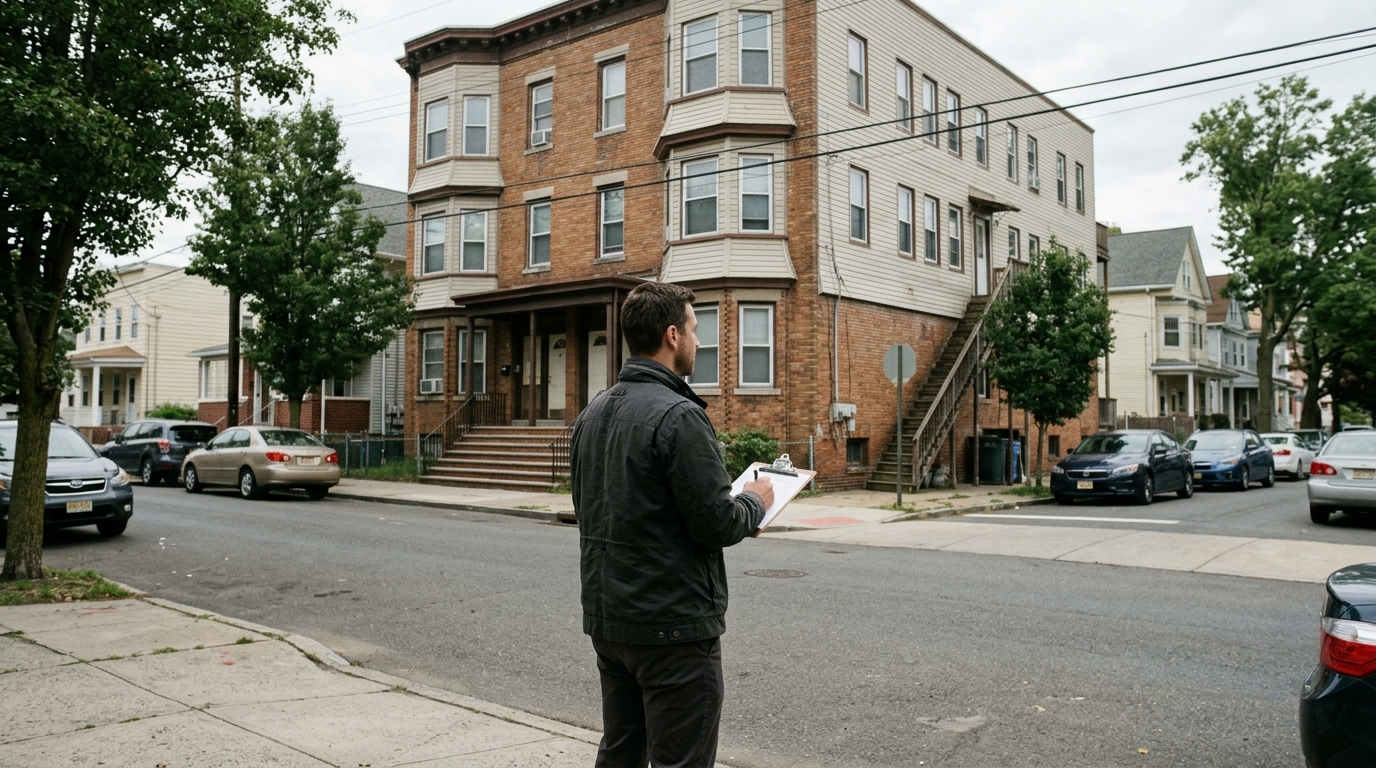
USPAP mandates a physical inspection for most credible appraisals. While desktop appraisals exist for certain lending purposes, they are often insufficient for legal, estate, or tax matters. A certified appraiser must inspect the interior and exterior of the property to verify condition, unit count, and amenities. NJREAG conducts thorough on-site inspections to document the true state of the asset.
4. Review the Appraiser's Independence and Objectivity
USPAP strictly prohibits bias or advocacy in the valuation process. The appraiser must remain independent and not be influenced by the desired outcome of the client. This is critical in divorce, estate, or tax appeal scenarios where one party might pressure the appraiser for a higher or lower number. NJREAG maintains strict objectivity, ensuring the final value is based solely on market data and professional judgment.

5. Check for Proper Documentation of Comparable Sales
Credible appraisals require a robust analysis of comparable sales. The appraiser must select comparable properties that are similar in size, location, age, and condition. For multi-family properties, this includes analyzing unit mix, occupancy rates, and rent schedules. NJREAG provides detailed documentation of these comparables, ensuring the adjustments made are logical and supported by market evidence.
6. Validate the Effective Date of the Valuation
The appraisal must clearly state the effective date of the value opinion. This is the specific date as of which the value is determined. In estate or divorce cases, this might be a past date (retrospective appraisal). In sales, it is the current date. NJREAG clearly defines the effective date in every report to prevent confusion and ensure the value is relevant to the specific legal or financial need.
7. Confirm the Report Meets USPAP Reporting Standards
The final report must comply with USPAP's reporting requirements. This includes a clear statement of the value, the effective date, and the scope of work. The report should be understandable to the intended users, whether they are attorneys, lenders, or courts. NJREAG produces court-ready reports that are structured for clarity and defensibility, ensuring they meet the high standards of New Jersey legal and financial institutions.
Choosing the Right Firm
When selecting an appraisal firm for a multi-family property, prioritize those who explicitly state their certification level and adherence to USPAP. Look for firms that specialize in the specific type of multi-family asset you own and have a track record of producing defensible, well-documented reports. NJREAG combines state certification with deep local market expertise to deliver the accuracy your property deserves.
Frequently Asked Questions
What is the difference between a Residential and General Certified Appraiser?
A Residential Certified Appraiser is qualified to appraise single-family homes and properties with up to four units. A General Certified Appraiser is qualified to appraise all property types, including multi-family properties with five or more units, commercial buildings, and land. For multi-family properties, you must hire a General Certified Appraiser.
Do I need a physical inspection for a multi-family appraisal?
Yes, for most legal, estate, and tax purposes, a physical inspection is required by USPAP. While desktop appraisals may be used for some lending transactions, they are generally not accepted for court proceedings, estate settlements, or tax appeals. A physical inspection ensures the appraiser can verify the property's condition and features.
How long does a multi-family appraisal take?
The timeline depends on the complexity of the property and the availability of comparable sales. Typically, a multi-family appraisal takes 5 to 10 business days after the inspection. NJREAG aims to deliver most reports within this timeframe, though urgent court matters may require expedited service.
Can I use a Zestimate for a multi-family property?
No, automated valuation models (AVMs) like Zestimates are not accepted by courts, the IRS, or most lenders for multi-family properties. These tools lack the nuance required to value income-producing properties and do not comply with USPAP. A certified appraisal is necessary for any formal legal or financial decision.
What is a retrospective appraisal?
A retrospective appraisal is a valuation that determines the value of a property as of a past date. This is commonly used in estate settlements (date of death) or divorce proceedings (date of separation). NJREAG provides retrospective appraisals that use historical market data to establish a credible value for the specified past date.