

Land Appraisal Pricing for NJ Developers and Estate Attorneys
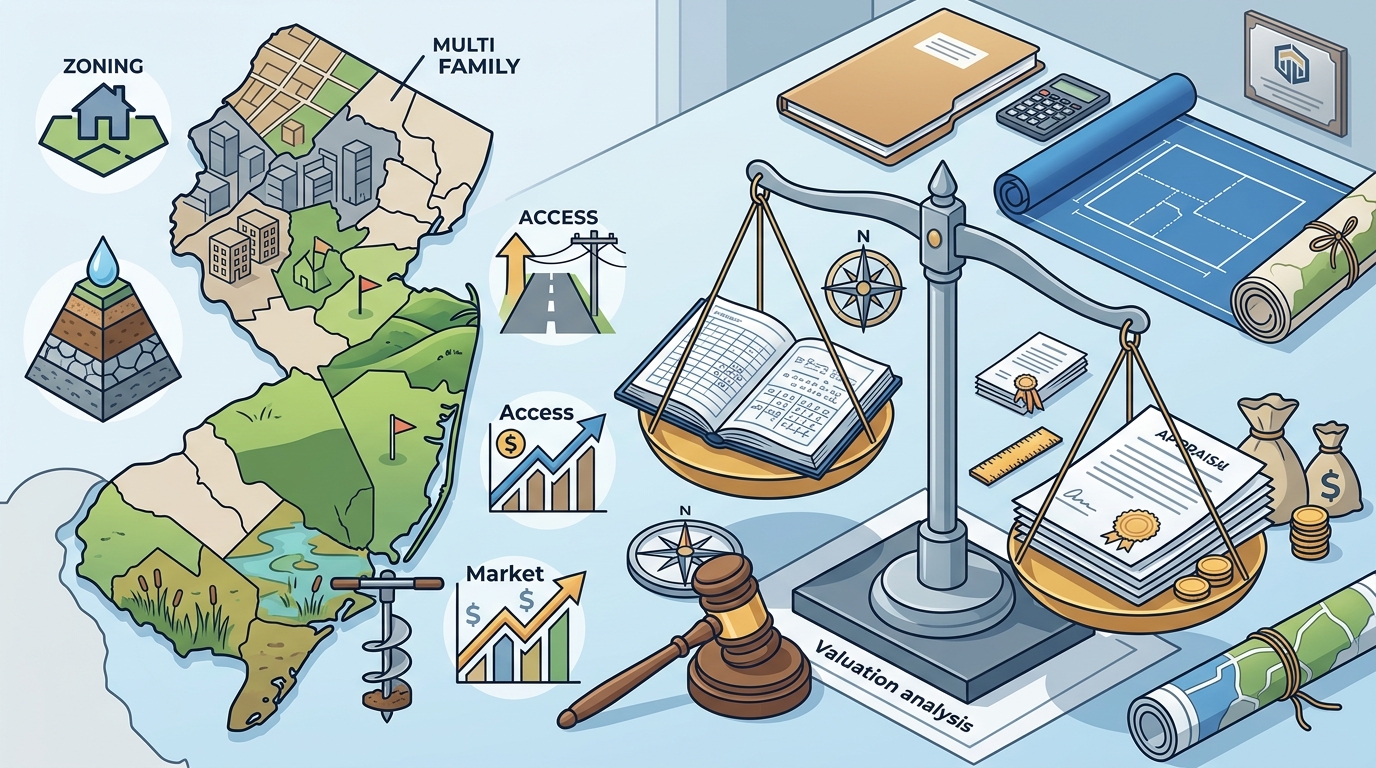
Land valuation in New Jersey is not a standardized commodity. It is a complex forensic analysis of zoning, soil, access, and market sentiment. For developers and estate attorneys, understanding the true cost of a state-certified appraisal is critical to protecting client assets and ensuring project viability. The average cost for a professional land appraisal in New Jersey ranges from $500 to $2,500, depending heavily on parcel size and intended use. This variance exists because a vacant lot in Atlantic County requires a different analytical framework than a 50-acre tract in Morris County. Understanding these nuances prevents costly delays in closing transactions or settling estates.
Key Factors Influencing Land Appraisal Costs
Land appraisal pricing is driven by the depth of research required to establish a defensible market value. Unlike residential homes, which have comparable sales data readily available, vacant land often lacks direct comparables. This scarcity forces appraisers to engage in extensive market analysis and hypothetical development modeling.
Parcel Size and Complexity
The size of the land parcel is the primary driver of cost. A small residential lot in Middlesex County may require a standard residential appraisal approach, costing closer to the lower end of the spectrum. However, a 100-acre commercial tract in Burlington County requires a commercial appraisal methodology. The appraiser must analyze zoning overlays, environmental constraints, and potential highest and best use scenarios. Larger parcels often require more site visits and detailed topographical reviews, increasing the labor hours involved.
Zoning and Development Potential
Zoning dictates the value of land more than any other factor. A parcel zoned for multi-family residential use holds significantly different value than one restricted to agricultural use. Appraisers must verify current zoning classifications with local municipal planning departments. If the land has potential for rezoning, the appraisal may need to include a feasibility study. This adds a layer of complexity that justifies higher fees. Local market expertise is essential here, as zoning interpretations can vary between townships.
Location and Accessibility
New Jersey's diverse geography impacts appraisal costs. Properties in high-demand areas like Bergen County may have more comparable sales data, potentially reducing research time. Conversely, rural properties in Sussex or Warren counties may require the appraiser to travel further and search for distant comparables. Accessibility issues, such as lack of road frontage or easement restrictions, also require detailed legal review, adding to the appraisal fee.
Appraisal Requirements for Real Estate Developers
For developers, land appraisals are not just about current value; they are about future potential. Developers need to know if a project is financially viable before purchasing the land. This requires a specialized type of valuation that considers development costs, profit margins, and market absorption rates.
Highest and Best Use Analysis
One of the most critical components of a land appraisal for developers is the Highest and Best Use (HBU) analysis. This process determines the most profitable legally permissible, physically possible, and financially feasible use of the land. For a developer, this analysis can mean the difference between a profitable project and a loss. An appraiser must analyze market trends, zoning laws, and infrastructure availability to determine the HBU. This detailed analysis is why commercial land appraisals cost more than residential ones.
Feasibility and Due Diligence
Developers often require appraisals that include feasibility studies. These reports assess whether the land can support the proposed development. Factors such as soil stability, water table levels, and environmental contamination risks are evaluated. If the land requires significant remediation or infrastructure work, the appraisal must account for these costs. This level of due diligence protects the developer from unexpected expenses during the construction phase.
Lender Requirements
Lenders require appraisals to ensure the loan amount is justified by the collateral value. For land loans, lenders are often more conservative than for residential mortgages. They may require a higher discount rate or a lower loan-to-value ratio. The appraisal must be robust enough to satisfy underwriting guidelines. A state-certified appraiser understands these lender requirements and can provide a report that meets all regulatory standards. Commercial appraisal services are designed to meet these rigorous lender demands.
Valuation Standards for Estate and Probate
Estate attorneys and executors face a different set of challenges when valuing land. The primary goal is to determine the fair market value at a specific point in time, often the date of death. This value is used for tax purposes and equitable distribution among heirs.
Date-of-Death Valuation
A date-of-death appraisal is a retrospective valuation. The appraiser must analyze market conditions as they existed on the specific date the decedent passed away. This requires access to historical sales data and market trends from that period. It is not enough to look at current prices. The appraiser must reconstruct the market environment of that past date. This specialized service ensures that estate taxes are calculated accurately and fairly. Estate appraisal resources provide further insight into these complex requirements.
IRS Compliance and Tax Appeals
The Internal Revenue Service (IRS) has strict guidelines for estate valuations. The appraisal must be prepared by a qualified appraiser who adheres to the Uniform Standards of Professional Appraisal Practice (USPAP). Non-compliance can lead to penalties and audits. For estate attorneys, a USPAP-compliant report is essential for defending the estate against potential IRS challenges. Additionally, if the estate includes real property, a separate appraisal may be needed for New Jersey inheritance tax purposes. Professional valuation standards ensure that these tax obligations are met precisely.
Equitable Distribution
In cases where land is part of a divorce settlement or family dispute, an unbiased appraisal is crucial. The appraiser must provide an objective opinion of value that can withstand legal scrutiny. This often involves detailed documentation of the property's condition, zoning, and comparable sales. The goal is to provide a clear, defensible value that facilitates fair distribution among parties. Court-ready appraisals are designed to support legal proceedings with accuracy and integrity.
New Jersey Regulatory and Zoning Impacts
New Jersey's regulatory environment is unique and complex. The state has strict environmental laws, zoning ordinances, and development regulations that significantly impact land value. Appraisers must be well-versed in these local regulations to provide an accurate valuation.
Environmental Constraints
Environmental issues are a major factor in New Jersey land appraisals. The state has stringent wetland regulations and soil contamination laws. A parcel with wetlands may have limited development potential, reducing its value. Similarly, suspected contamination can require expensive remediation, which must be accounted for in the appraisal. Appraisers often collaborate with environmental consultants to assess these risks. This collaborative approach ensures that the valuation reflects the true cost of development.
Zoning and Municipal Variance
Zoning laws vary significantly across New Jersey's 563 municipalities. Some townships are more development-friendly than others. Appraisers must understand the specific zoning codes and overlay districts that apply to each parcel. If a property has a variance or special exception, the appraisal must reflect the value associated with that use. Understanding local municipal processes is key to accurate valuation. Local zoning expertise is a critical component of the appraisal process.
Infrastructure and Utilities
The availability of utilities is a key determinant of land value. Parcels with existing water, sewer, and electric connections are more valuable than those requiring new installations. Appraisers must verify the status of these utilities and estimate the cost of extending them if necessary. This analysis adds to the complexity of the appraisal but is essential for an accurate value. Our team's local knowledge helps navigate these infrastructure challenges effectively.
Service Comparison: Residential vs. Land Appraisals
Understanding the difference between residential and land appraisals is crucial for selecting the right professional. While both involve property valuation, the methodologies and costs differ significantly.
| Feature | Residential Home Appraisal | Land Appraisal |
|---|---|---|
| Primary Focus | Current market value of improved property | Highest and best use of vacant land |
| Comparable Sales | Abundant data available | Limited data, requires adjustment |
| Cost Range | $300 - $600 | $500 - $2,500+ |
| Complexity | Standardized approach | High, requires zoning analysis |
| Turnaround Time | 3-5 business days | 5-7 business days |
As shown in the table, land appraisals are generally more expensive and complex due to the lack of comparable data and the need for specialized analysis. Developers and estate attorneys must budget accordingly. Professional appraisal services ensure that these complexities are handled with precision.
Key Takeaways
- Cost Variance: Land appraisal costs in New Jersey range from $500 to $2,500+, driven by parcel size and zoning complexity.
- Developer Needs: Developers require Highest and Best Use analysis to assess project viability and secure financing.
- Estate Compliance: Estate appraisals must be USPAP-compliant and reflect date-of-death market conditions for tax purposes.
- Regulatory Impact: New Jersey's strict zoning and environmental laws significantly influence land value and appraisal depth.
- Expertise Required: State-certified appraisers with local knowledge are essential for accurate and defensible valuations.
- Turnaround Time: Expect a 5-7 business day turnaround for land appraisals due to the detailed analysis required.
- Strategic Value: A professional appraisal protects developers and estate attorneys from financial and legal risks.
Frequently Asked Questions
How much does a land appraisal cost in New Jersey?
The cost typically ranges from $500 for small residential lots to $2,500 or more for large commercial tracts. The final price depends on the parcel size, zoning complexity, and the intended use of the appraisal.
Why do land appraisals cost more than home appraisals?
Land appraisals require more extensive research because there are fewer comparable sales data points. Appraisers must analyze zoning, environmental constraints, and development potential, which adds time and complexity to the report.
Can I use a residential appraisal for a land purchase?
No, lenders and legal entities typically require a specialized land appraisal. A residential appraisal focuses on improved properties and may not adequately address the unique risks and values associated with vacant land.
What is a Highest and Best Use analysis?
It is a process that determines the most profitable legally permissible use of a property. For developers, this analysis is critical for assessing the financial feasibility of a project.
How long does a land appraisal take?
Most land appraisals are completed within 5-7 business days after the site inspection. This timeframe allows for thorough data analysis and report preparation.
Do estate appraisals need to be USPAP compliant?
Yes, estate appraisals for tax and legal purposes must adhere to the Uniform Standards of Professional Appraisal Practice (USPAP) to be accepted by the IRS and courts.
What factors affect the value of vacant land in New Jersey?
Key factors include zoning classifications, access to utilities, environmental conditions, topography, and proximity to amenities. Each of these elements must be carefully analyzed to determine accurate value.
Request Your Professional Land Appraisal
Whether you are a developer evaluating a new project or an estate attorney settling a complex probate, accurate land valuation is non-negotiable. New Jersey Real Estate Appraisal Group provides state-certified, USPAP-compliant land appraisals tailored to your specific needs. Our team of experts brings over 26 years of experience to every assignment, ensuring you receive a defensible and accurate valuation. Contact us today to schedule your appraisal and protect your interests with precision.